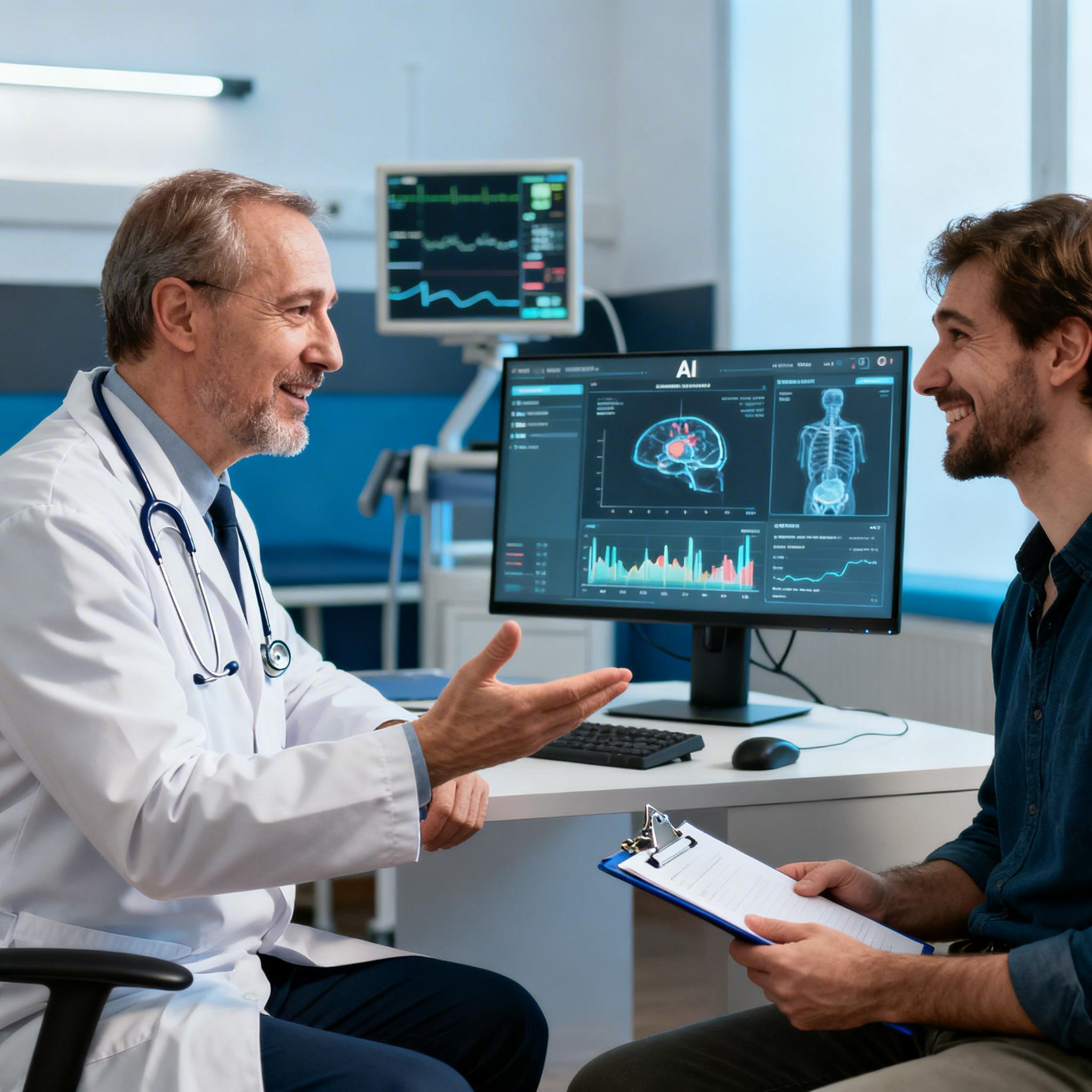
How AI Improves Medical Diagnosis: Success Stories
Artificial intelligence is no longer a concept confined to research labs or science fiction. It is actively reshaping how diseases are detected, how clinicians make decisions, and how patients experience care. Across specialties and geographies, AI-powered diagnostic tools are delivering results that were unimaginable just a decade ago.
The Diagnostic Challenge in Modern Medicine
Every day, clinicians face an enormous volume of information — imaging scans, lab results, patient histories, genetic data, clinical notes. The human brain is remarkable, but it has limits: fatigue, cognitive bias, information overload, and the simple constraints of time all affect diagnostic accuracy.
Misdiagnosis is not rare. Studies suggest that diagnostic errors affect approximately 12 million adults in the United States each year, and that serious harm results in roughly one in three of those cases. Globally, the burden is even greater — compounded by physician shortages, uneven access to specialists, and the growing complexity of disease.
This is precisely where artificial intelligence steps in.
What AI Actually Does in Diagnosis
AI diagnostic tools are trained on vast datasets — millions of medical images, clinical records, pathology slides, genomic sequences — to recognize patterns that signal disease. Unlike traditional software, these systems learn and improve over time, often identifying subtle markers that the human eye might miss.
The most impactful applications fall into several categories:
- Medical imaging analysis — reading X-rays, CT scans, MRIs, and pathology slides
- Clinical decision support — flagging risk factors, suggesting diagnoses, alerting to drug interactions
- Predictive analytics — identifying patients at high risk of deterioration before symptoms escalate
- Natural language processing — extracting meaningful data from unstructured clinical notes and records
- Genomic and molecular analysis — identifying disease markers at a biological level
Real-World Success Stories
Detecting Cancer Earlier and More Accurately
One of the most well-documented applications of AI in diagnosis is in oncology. Google Health developed an AI model trained on mammography images that demonstrated the ability to detect breast cancer with greater accuracy than radiologists — reducing both false positives and false negatives in clinical trials. In real-world screening environments, this translates to earlier detection, less unnecessary intervention, and ultimately, lives saved.
In dermatology, researchers at Stanford University trained a deep learning algorithm on nearly 130,000 skin lesion images. The system matched — and in some tests exceeded — the diagnostic accuracy of board-certified dermatologists when distinguishing malignant melanoma from benign lesions. For primary care settings without a dermatologist on staff, this kind of AI-assisted screening could fundamentally change early cancer detection.
Transforming Radiology
The radiology suite has become one of the most active frontiers for AI. IDx-DR, the first FDA-authorized AI diagnostic system for autonomous use, screens diabetic patients for retinopathy without requiring a specialist to interpret the results. The system analyzes retinal photographs and returns a result in minutes — a capability with enormous implications for primary care clinics and underserved communities where ophthalmologists are scarce.
In chest imaging, AI systems have demonstrated the ability to detect pneumonia, pulmonary nodules, and COVID-19 patterns on CT scans with remarkable speed and accuracy. During the pandemic, several healthcare systems deployed AI tools to triage imaging queues and prioritize the most critical cases — enabling faster interventions when time was a matter of survival.
Predicting Sepsis Before It Strikes
Sepsis is one of the leading causes of hospital mortality worldwide, and its greatest danger lies in how quickly it progresses. Early identification is everything. The Early Warning System developed at Johns Hopkins, powered by AI algorithms, analyzes continuous streams of patient vital signs, lab values, and clinical data to flag patients at risk of sepsis hours before traditional clinical criteria would trigger an alert.
Hospitals that have implemented similar predictive tools report significant reductions in sepsis mortality. The AI doesn't replace the clinician — it acts as a tireless monitor, ensuring that no warning sign goes unnoticed.
Cardiology and ECG Interpretation
Atrial fibrillation is a common but often undiagnosed cardiac arrhythmia that dramatically increases the risk of stroke. Mayo Clinic developed an AI algorithm capable of detecting atrial fibrillation — even during periods when the rhythm appears normal — from a standard 12-lead ECG. This is a condition the human eye cannot reliably detect from the same data. The AI identified a hidden signal that had simply never been seen before.
In another study from the same institution, an AI model analyzed routine ECGs and predicted left ventricular dysfunction — a key marker of heart failure — with an accuracy that outperformed standard clinical assessment. Thousands of patients with previously unrecognized cardiac risk were identified through this work.
Accelerating Rare Disease Diagnosis
For patients with rare or undiagnosed diseases, the diagnostic journey is often measured in years. AI is beginning to compress that timeline dramatically. Face2Gene, a clinical AI tool developed by FDNA, analyzes facial features using deep learning to identify patterns associated with rare genetic syndromes. Clinicians using the tool have been able to reach diagnoses in days that might previously have taken years of specialist referrals and inconclusive testing.
Similarly, natural language processing tools are now being used to mine electronic health records for symptom clusters associated with rare conditions — surfacing patients who might otherwise have gone undiagnosed for years.
What Makes These Successes Possible
Behind every AI diagnostic success story is a set of enabling conditions:
- High-quality, large-scale training data — AI models are only as good as the data they learn from
- Clinical validation — rigorous testing in real-world settings to confirm accuracy and safety
- Integration with clinical workflows — tools that fit into how providers actually work, rather than adding friction
- Human-AI collaboration — the most effective models augment clinical judgment rather than replacing it
- Diverse and representative datasets — ensuring that AI performs equitably across different patient populations
AI as a Partner, Not a Replacement
A critical point that often gets lost in the excitement around AI diagnostics: these systems are not designed to replace physicians. They are designed to make physicians better.
The most successful implementations treat AI as a second set of eyes — one that never tires, never rushes, and can process information at a scale no human can match. The clinician remains the decision-maker. The AI surfaces insights, flags risks, and handles the cognitive load of pattern recognition so that the provider can focus on what only humans can do: listening, empathizing, contextualizing, and caring.
The Road Ahead
We are still in the early chapters of AI-assisted diagnosis. The tools that exist today are impressive — but they represent a fraction of what is coming. As training datasets grow, as models become more interpretable, and as integration with EHR and telehealth platforms deepens, the diagnostic capabilities available to every clinician — regardless of their specialty or location — will expand dramatically.
Platforms like CareExpand are at the forefront of this integration, enabling healthcare organizations to bring intelligent, connected, and AI-ready workflows to their providers and patients. The future of diagnosis is not human or machine — it is human and machine, working together.
Conclusion
Artificial intelligence is already saving lives through earlier cancer detection, faster sepsis alerts, previously impossible cardiac diagnoses, and accelerated rare disease identification. These are not hypothetical outcomes — they are documented, peer-reviewed, real-world results happening in hospitals and clinics right now.
For healthcare organizations that want to deliver the highest standard of care, embracing AI-powered diagnostic tools is no longer a forward-looking ambition. It is a present-day imperative.
The question is not whether AI will transform medical diagnosis. It already has. The question is whether your practice is ready to be part of that transformation.
Related posts


El sistema operativo para una atención basada en el valor
Y experimente el impacto de la telemedicina en su organización